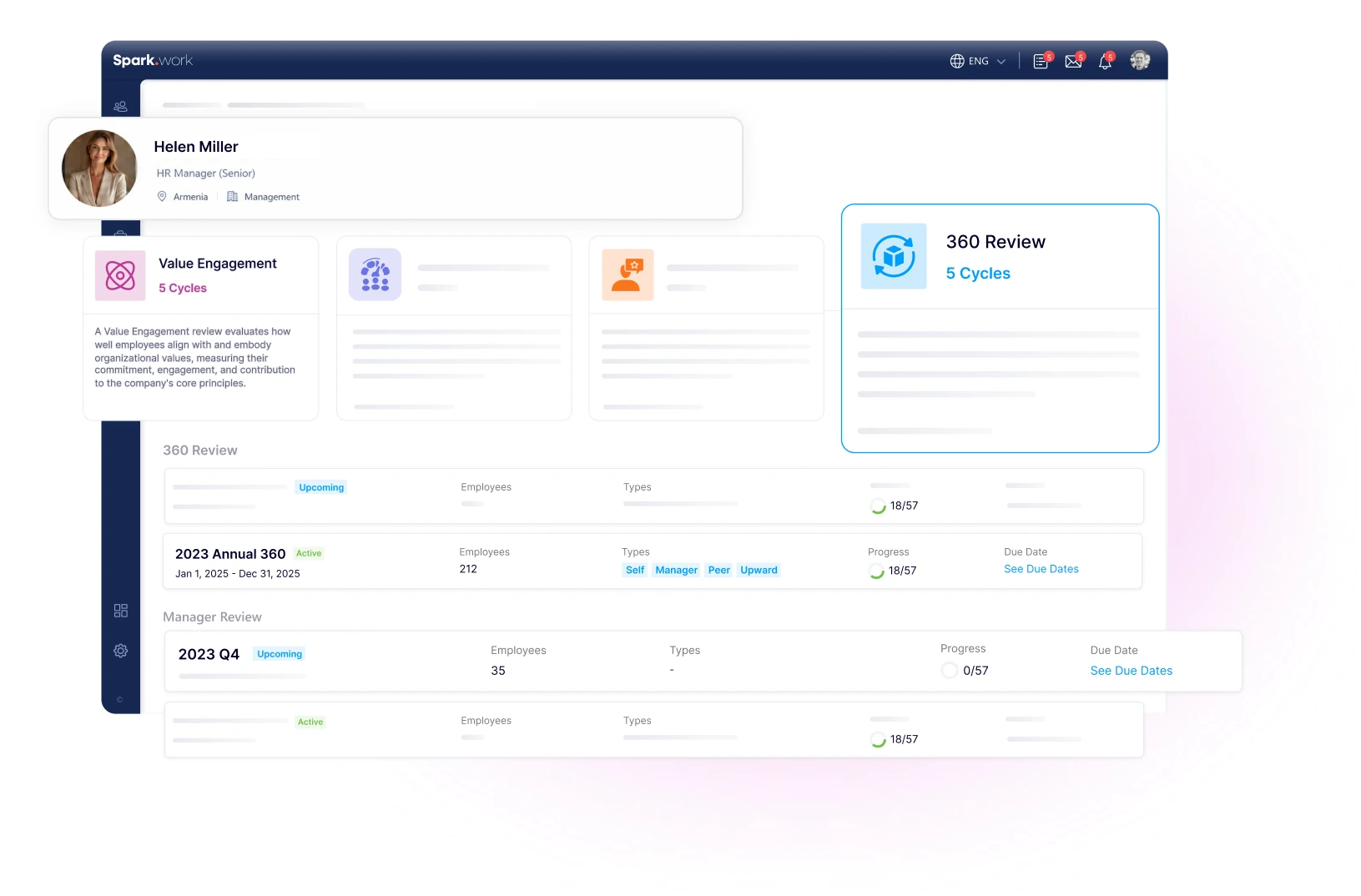
Reviews that fit how you actually work
Configure the review cycles your organization runs instead of adopting a fixed template, and keep the full evaluation history on the employee record.
- Review cycles and appraisals
- 360 reviews
- Manager reviews
- Performance assessment
Measure against real objectives
Because strategy and people management share one platform, a review can point at the OKRs and KPIs the person owns rather than a separate copy of them.
- OKR ownership and progress
- KPI targets and actuals
- Goals and personal development plans
- Initiative contribution
Competencies and career progression
Define what good looks like at each level, then use the same definitions in reviews and in career conversations.
- Competency library
- Competency matrix
- Competency profile
- Career paths
Continuous feedback, not just cycles
An annual review is a poor sole record of a year. Keep the ongoing conversation in the same place as the formal one.
- One-on-one meetings
- Feedback
- Recognition
- Employee reviews
Visibility for managers and HR
Give managers the picture of their own team, and HR the organization-wide view, from the same underlying data.
- Team dashboard
- 9-box grid
- Workforce analytics
- HR reporting
Where AI helps
Spark.work AI assists the people doing the work - drafting, summarizing and surfacing context. A person still decides and approves.
- AI agents across strategy, KPIs, OKRs and HR
- Human-in-the-loop by design
- Survey and feedback analysis
How performance management works in Spark.work
Performance management in Spark.work is a cycle rather than an annual form. Expectations are set as goals linked to team and company objectives and as competencies defined per role. One-on-ones, continuous feedback and recognition build the record through the year. Review cycles run per appraisal group with manager, self, 360 and executive evaluations, and development plans, career paths and learning follow from the review inside the same system, so the next cycle starts from evidence rather than memory.
- Goals connected to OKRs and KPIs
- Competency frameworks defined per role
- Configurable review cycles per appraisal group
- Full evaluation history on the employee record
Who it is for
Built for mid-size organizations that want performance, people data and strategy in one system rather than three: HR teams that run several review cycles a year, managers who need their team's goals, requests and reviews in one view, and leadership that wants to see whether the people plan and the strategy are moving together. Spark.work is used by telecom, software and professional services companies, including Ucom, EasyDMARC and Volo.
- HR teams running multiple review cycles
- Managers who need one view of their team
- Leadership tracking people and strategy together
- Companies replacing separate review, goal and HR tools