

Maintain a centralized library of positions that can be reused consistently across departments and locations.
HRMS
Position Management
Create the structure behind every role, career path, and reporting relationship.
Request a Demo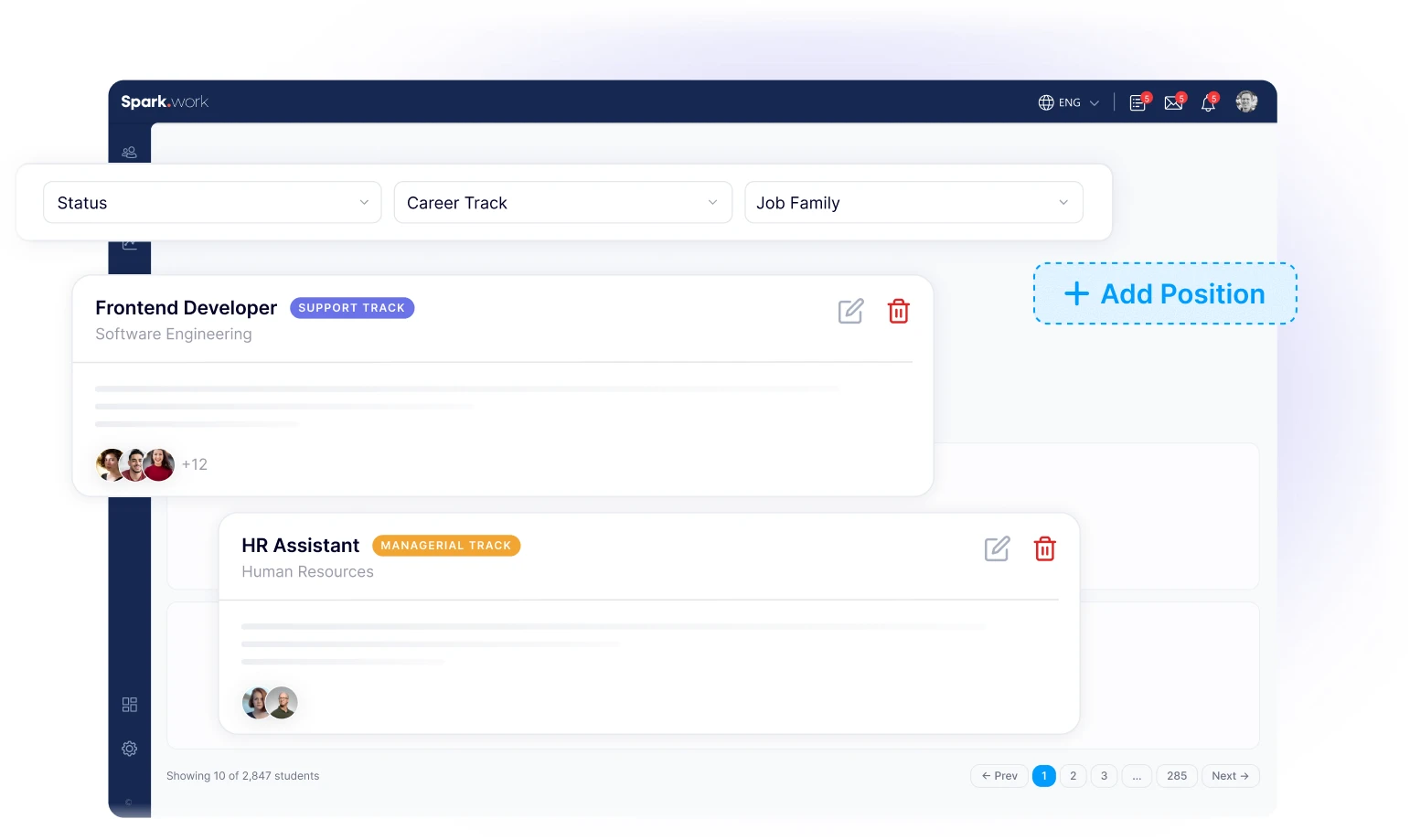
Create a Consistent Framework for Every Role
Define how positions are structured, how employees grow, and how roles connect across your organization.
Define career levels and career tracks that provide employees with clear development paths.
Map managers, mentors, coaches, leads, and other reporting relationships across the organization.
POSITION STRUCTURE
Build the Foundation of Your Job Architecture.
Create and organize the elements that define every role in your organization, from job titles to career progression.
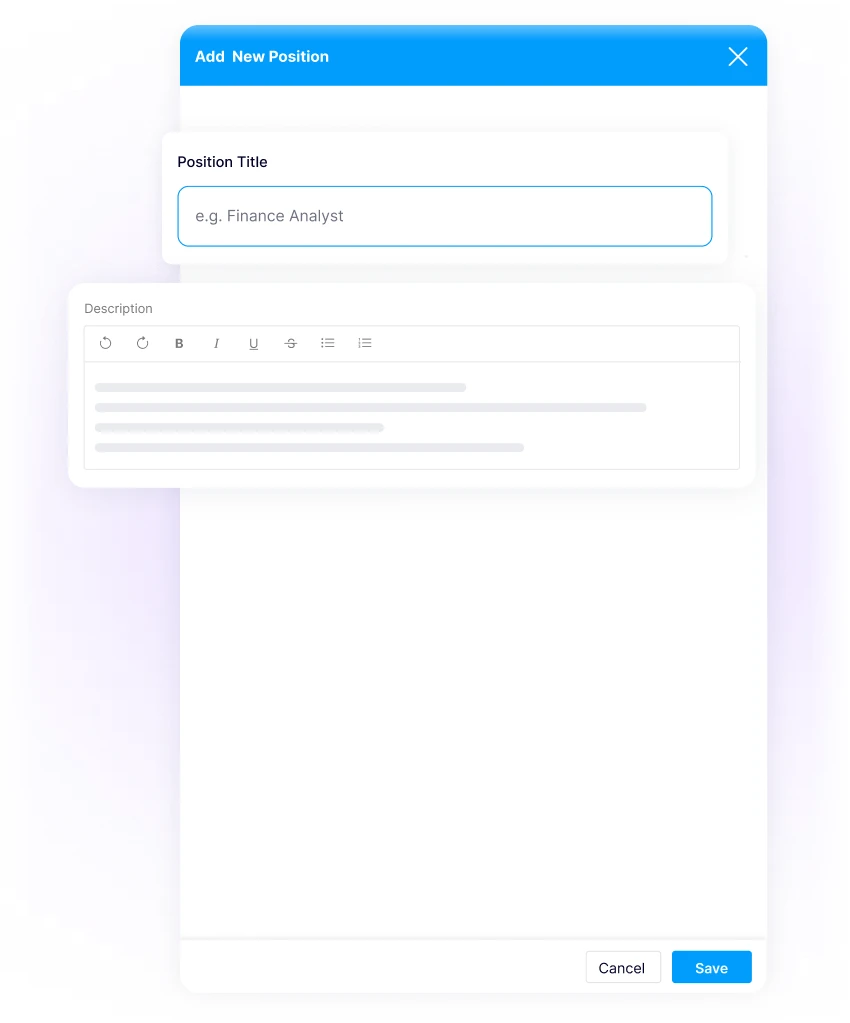
- Manage Position TitlesCreate and maintain a centralized library of positions that can be used consistently across your organization.
- Define Career LevelsOrganize positions by seniority levels such as Intern, Senior, Team Lead, Executive, or any framework your organization follows.
- Create Career TracksDefine professional, managerial, expert, or custom career paths to support different types of employee growth.
- Group Roles into Job FamiliesCategorize positions into functional areas such as Finance, Administration, Engineering, Customer Support, or any other business function.
JOB RELATIONSHIPS
Define How Roles Work Together.
Connect positions to their direct managers for clear reporting structures.
Establish mentors, coaches, team leads, consultants, or any other relationships that support employee success.
Build structures that reflect how your organization actually operates rather than forcing rigid hierarchies.
Help employees understand who they report to, who supports them, and how each role fits within the organization.
FAQ
Have More Questions? We've Got You Covered
What is Position Management?
Position Management allows organizations to define and organize positions, career levels, career tracks, job families, and job relationships in one centralized system.
What are career levels?
Career levels define employee seniority, such as Intern, Senior, Team Lead, Executive, or any structure your organization uses.
What are career tracks?
Career tracks define different paths for employee growth, such as professional, managerial, or expert tracks.
What are job families?
Job families group similar positions into broader functional categories like Finance, Engineering, Administration, or Customer Support.
Can I define reporting relationships between positions?
Yes. Spark.work allows you to define managers, mentors, coaches, team leads, consultants, and other job relationships to reflect your organizational structure.
Bring Structure to Every Position
Organize roles, career paths, and reporting relationships in one place, giving your teams the clarity they need to grow.