
Set the direction
The framing layer: what the organization is for and what it is trying to become.
- Vision, mission and values
- North stars and cycles
- Culture, communication and history
Strategic Planning
Planning and execution usually live in different tools, which is why plans go stale. In Spark.work the plan you write is the same object your teams execute against - the pillars, goals and cycles defined here are what OKRs, KPIs and initiatives attach to.
Request a Demo
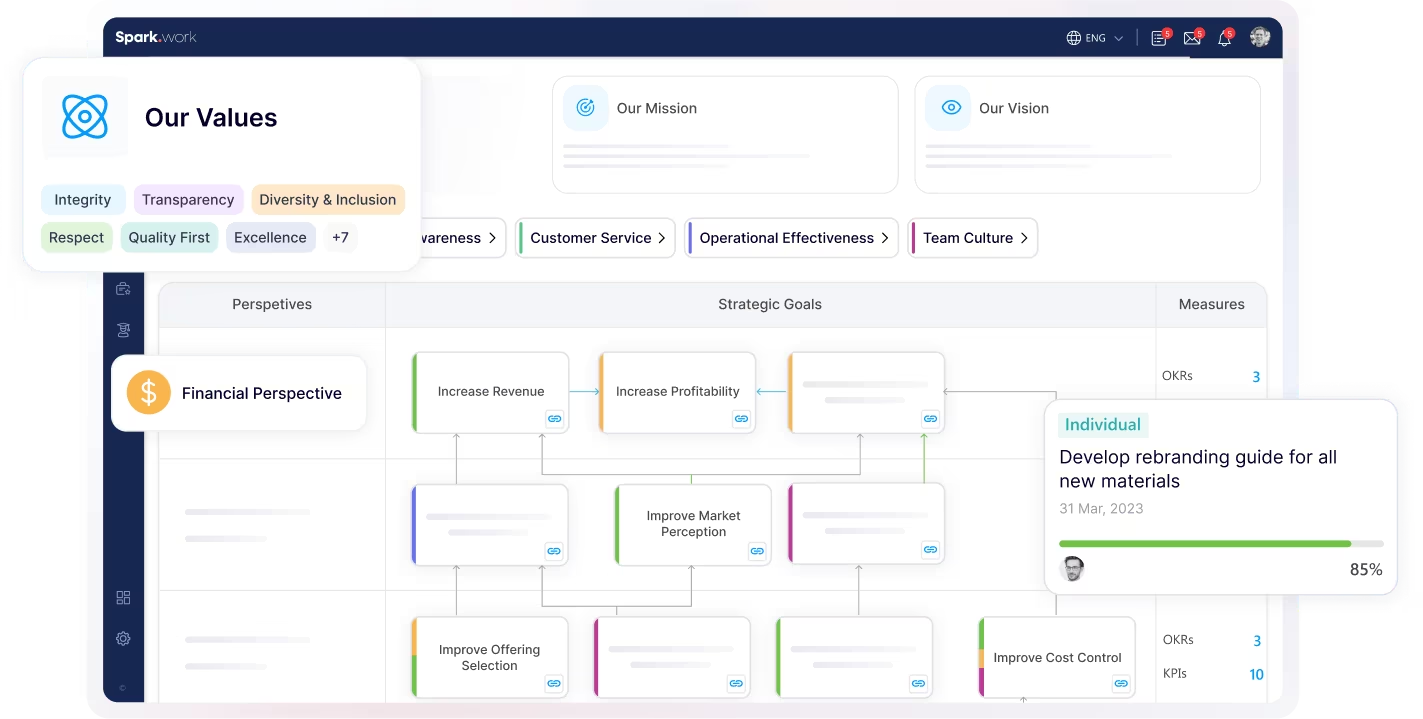
The framing layer: what the organization is for and what it is trying to become.
Break direction into pillars and goals that teams can work against.
A plan becomes real when proposals become committed, owned initiatives.
No handoff and no re-keying: the plan and the execution layer are the same records.
Plans fail on capacity as often as on ambition. Because HR data is in the same platform, planning can account for the organization you actually have.
Strategic Planning
Planning is the front half of the strategy module - execution is the other half.
FAQ
Software for defining an organization's direction - vision, mission, values, pillars, goals and planning cycles - in a structured form. In Spark.work that structure is also what execution attaches to, so the plan does not need to be re-entered anywhere.
Yes. Pillars, goals, perspectives and cycles are configurable rather than a fixed template, so an existing framework can usually be modelled directly.
Goals carry OKRs and KPIs, and initiatives are attached to the objectives they serve. Progress is then tracked against the same records, which is what keeps the plan current between review cycles.