
Strategy & Execution
HR Software With OKRs: What to Look For Beyond Goal Tracking

Last reviewed: September 2026. Vendor capabilities change frequently; verify current functionality directly before making a purchasing decision.
Several HR platforms now offer goal setting or OKRs alongside people management. BambooHR supports employee goal setting, while Leapsome supports individual, team, and company-wide goals and OKRs. The useful question is therefore not only whether a platform includes goals. It is how far the goal structure reaches: individual performance goals, team and company OKRs, or the strategy layer that connects objectives with KPIs, strategic initiatives, and longer-term priorities.
The problem most teams are actually trying to solve
A familiar pattern emerges in growing companies. HR runs in one system. Strategy runs somewhere else, usually a spreadsheet, sometimes a dedicated OKR tool, often a quarterly slide deck that nobody opens again between week two and week twelve.
The visible symptom is duplicated work. Someone updates a goal in the OKR tool, someone else updates the same goal in the performance review, and by the end of the quarter the two disagree about what was actually achieved.
The less visible symptom matters more: the goals employees see, and the strategy the board approved are different objects that happen to share vocabulary. A performance review says "increase customer retention." The strategy deck says the same words. Nothing structurally connects them, so nobody can answer whether the retention work anyone did actually moved the strategic objective.
Buying one tool instead of two may reduce duplicated updates. It closes the wider execution gap only if the platform connects goals to a structured strategy, rather than simply placing HR records and goals in the same interface.
Three levels of goal capability
Many HR and performance platforms use the term "goal management." That phrase can refer to three different levels of capability, so buyers need to look beyond the label.
Level 1: Individual goals attached to performance reviews
An employee sets goals, a manager reviews them, and the results may feed into a performance assessment. This supports performance conversations and is a common form of goal management in HR platforms.
If goals are created only at the individual level for performance reviews, they do not automatically provide a view of company direction. Aggregating individual targets is not the same as structuring a strategy.
Level 2: Team and company OKRs with alignment
Objectives and Key Results (OKRs) can be set at company, team, and individual levels. The platform should make the relationships among them visible, so people can see how their work supports a broader priority.
This is the capability generally expected from dedicated OKR software. It makes alignment visible and helps people understand how their work supports a broader objective.
Level 3: Strategy execution
The layer executives actually work in. Balanced scorecards distributing focus across financial, operational, people, and growth dimensions. Strategy maps showing how objectives depend on one another. KPI hierarchies linking operational metrics to strategic ones. Strategic initiatives with owners, timelines, and budgets.
At this level, OKRs can support execution within a broader strategy that is managed as a structured system rather than left in a narrative document.
The difference between Level 2 and Level 3 matters when leaders need to evaluate strategy, not only goal completion. Teams can align and update OKRs consistently while still lacking a clear view of whether those results changed the strategic outcomes the organisation is trying to improve.
How selected platforms document these capabilities
This table is based on current vendor product pages and help content reviewed in September 2026. It compares only the capabilities relevant to this article. It is not a complete feature comparison, and we did not test each product directly.
"Not identified in the reviewed documentation" means exactly that. It does not prove that a feature is unavailable, since it may exist under different terminology, in another module, or outside public documentation. Buyers should ask vendors to demonstrate any capability that matters to their decision.
| Platform | Core HR offering | Goals / OKRs | Strategy features beyond goals |
|---|---|---|---|
| BambooHR | Yes. HR data, hiring and onboarding, time, and other HR functions. Payroll and benefits vary by market and package. | Employee goal setting within Performance Management. The reviewed page does not describe a dedicated OKR framework. | Not identified in the official sources reviewed.* |
| Lattice | No current core HR offering is shown. Its former HRIS and payroll products were discontinued in 2026. | Goals & OKRs within its talent and performance offering. | Not identified in the official sources reviewed.* |
| Leapsome | Yes. An HRIS connecting employee data with HR and performance workflows. | Individual, team, and company-wide goals and OKRs. | Not identified in the official sources reviewed.* |
| Spark.work | Yes. Employee records, organisational structures, onboarding, leave, attendance, requests, and other HRMS workflows. | Organisation-wide OKR alignment connected to strategic goals. | Balanced Scorecard, strategy maps, linked KPI tracking, and initiative management. |
*The final column checks only for Balanced Scorecards, strategy maps, KPI-to-strategy structures, and initiative management. "Not identified" is not a claim that these features are unavailable. The comparison does not judge overall product quality or imply that every buyer needs a formal strategy-management layer.
What Lattice's HRIS exit shows about consolidation risk
Product continuity is an important part of any consolidation decision. Lattice announced in November 2025 that it would discontinue its HRIS and payroll products. According to Calamari's summary of the shutdown, payroll access ended on 31 March 2026 and HRIS access ended on 31 July 2026, while Lattice continued its talent and performance products.
Two lessons for anyone evaluating an integrated platform:
Ask how central both product areas are to the vendor's roadmap. Core HR requires ongoing investment in areas such as security, integrations, data governance, and local requirements. Buyers should understand whether HR operations and goal management are both long-term parts of the product strategy.
Ask what happens to your data. A discontinued product can require organisations to move employee records, leave history, onboarding workflows, permissions, and reports on a fixed timeline. Before consolidating, ask about export formats, data portability, migration support, and the process for communicating significant product changes.
This is not an argument against integrated platforms. It is a reason to evaluate product depth, roadmap commitment, and data portability alongside the feature list.
When one platform is the wrong answer
Consolidation is not automatically the right choice. Separate tools may be more practical when:
- You need specialised OKR functionality. If your process depends on particular scoring methods, check-in cadences, confidence tracking, or advanced integrations, compare those requirements directly across dedicated and integrated platforms.
- Your HR system is entrenched and works. Migrating an HRIS is genuinely disruptive. Adding a focused OKR tool alongside a system your team already knows is often the lower-risk path.
- Strategy and HR have separate owners and workflows. A shared platform creates more value when the two functions actively exchange information and use connected processes.
- You only need individual goals for reviews. If your existing HRIS already covers this requirement, buying another platform may mean paying for capability you will not use.
When one platform is the right answer
Consolidation pays off when:
- The same leaders need visibility across both. A connected platform reduces the need to reconcile separate versions of goals, performance data, and strategic priorities.
- You want strategy visible in daily work. Goals living in a system employees open weekly behave very differently from goals living in a deck they see once a quarter.
- You need to connect execution and people context. A shared data structure can make it easier to review goals alongside team structure, ownership, feedback, and performance processes. Ask vendors to demonstrate the exact reports and permissions you need.
- Administrative overhead is a real cost. Two vendors, two contracts, two integrations, two sets of permissions and access reviews, smaller teams feel this disproportionately.
Where Spark.work fits
Spark.work combines HRMS capabilities with strategy management software in one platform. Its role in this comparison is not simply that it includes OKRs, but that OKRs can connect with KPIs, strategic goals, initiatives, and people processes.
HR: organisational structure, employee directory and profiles, on- and offboarding, document management, time and attendance, leave management, applicant tracking, employee self-service, surveys and engagement tools, 360 reviews, feedback and recognition.
Strategy: OKR management software with organisation-wide alignment, a Balanced Scorecard, KPI tracking linked to goals and initiatives, strategy maps, and initiatives with clear ownership and timelines.
Because pricing and packaging can change, check the Spark.work pricing page for the current base plan and optional Strategy and Execution module.
When Spark.work may not be the right fit. If you already have an HRIS that works well and need only a specialised OKR layer, replacing the HR system may create unnecessary disruption. Spark.work also does not provide native payroll processing, so organisations that require payroll within the same platform should evaluate other options.
Questions to ask any vendor
Useful regardless of which direction you go:
- Can objectives be linked directly to KPIs, or are the two tracked separately?
- Can I see how a team's objectives connect to a company-level strategic objective, as a structure, not just a text reference?
- Does the strategy layer support anything above OKRs, such as scorecards or strategy maps?
- Can performance review data and goal attainment data be analysed together?
- What happens to historical goal data when a quarter closes? Can I compare across periods?
- Is pricing per employee, per module, or both, and what's the total at my headcount?
- What is your data export format, and what is your commitment on product lifecycle?
Question 3 helps distinguish goal tracking from a broader strategy management layer. Question 7 addresses continuity and migration risk, which can be easy to overlook during feature comparisons.
External sources used
FAQ
Frequently asked questions
Do all HR platforms include OKRs?
No. Some HR platforms include employee goal setting, while others support structured OKRs at individual, team, and company levels. The meaningful differences are in depth, alignment, reporting, and whether the platform connects OKRs to a broader strategy layer.
What happened to Lattice's HRIS?
Lattice notified customers in November 2025 that it was discontinuing its HRIS and payroll products. Payroll access ended 31 March 2026 and HRIS access ended 31 July 2026. Lattice continues to offer performance management, goals and OKRs, engagement, career development, and compensation. Customers who used Lattice for core HR records need an alternative HR system; those using it purely for performance and OKRs are unaffected.
What's the difference between goals and OKRs?
A goal is any target. OKRs are a specific framework: a qualitative Objective paired with a small number of measurable Key Results, often managed in defined cycles. All OKRs are goals, but not every goal-tracking feature is a full OKR implementation.
Can I use an HR platform's OKR module instead of a dedicated OKR tool?
Possibly, but the answer depends on your process. Compare the scoring methods, check-ins, alignment views, integrations, reporting, permissions, and historical analysis you actually use. An integrated module may be sufficient when the main need is to keep goals visible alongside people and performance workflows. A dedicated tool may be more suitable when advanced OKR workflows are central to how the company operates.
What is a balanced scorecard, and do I need one?
A Balanced Scorecard is a strategy management framework that organises objectives across four perspectives: financial, customer, internal processes, and learning and growth. It is most useful when leaders need to manage several strategic priorities together, connect them to measures and initiatives, and review progress as a system rather than as a list of separate goals.
Is it cheaper to buy one platform or two?
It depends on both vendors' pricing models, and per-employee pricing means the answer changes as you grow. Calculate both at your actual headcount rather than assuming bundling is cheaper. Sometimes it isn't.
More Articles to Explore

From HRMS to Strategy Execution Software
The line between HRMS and strategy execution software is disappearing as organizations demand real alignment between people, performance, and business outcomes.
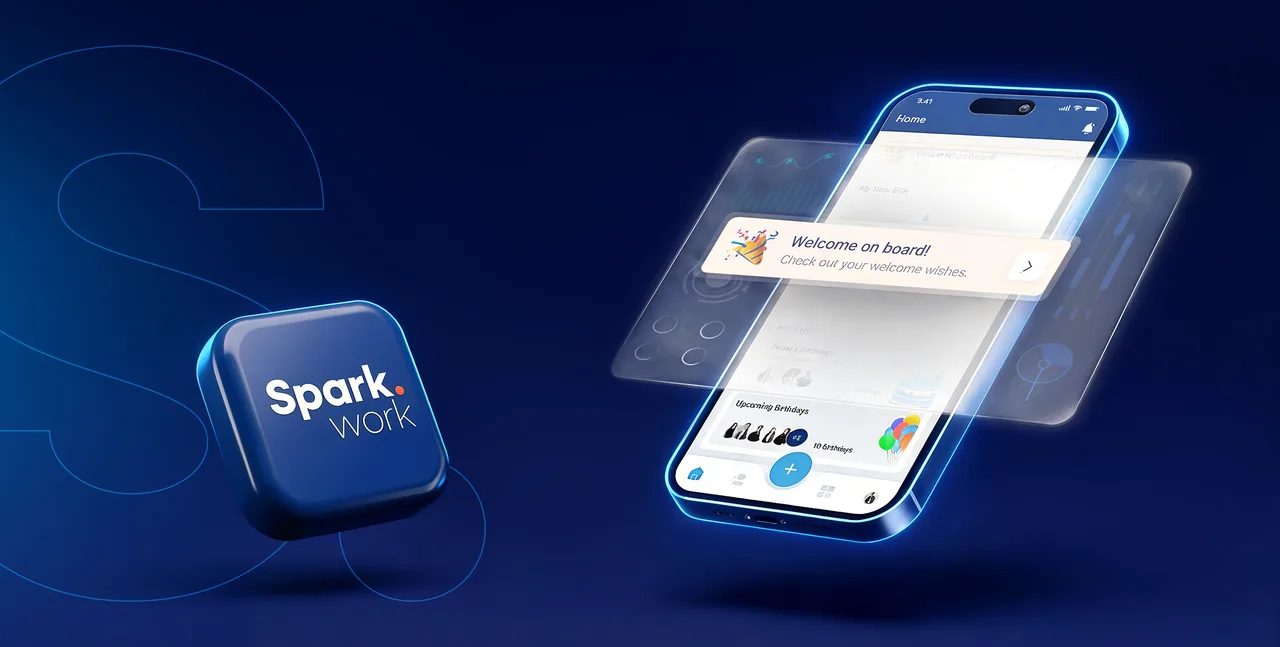
Spark.work Mobile: An HR Mobile App Employees and Managers Will Actually Use
Spark.work Mobile brings time-off requests, approvals, company news, feedback, recognition, and objectives into one HR app for employees and managers.
Onboarding Documents
Poor onboarding rarely fails on day one, it fails months later through reporting gaps and misaligned expectations.