

Set Clear Expectations
Define what needs to be achieved, by whom, and when, so every objective has a clear direction from the start.
MBO
Define objectives with clear ownership, deadlines, and success criteria. Align individual and team goals with organizational priorities.
Request a Demo
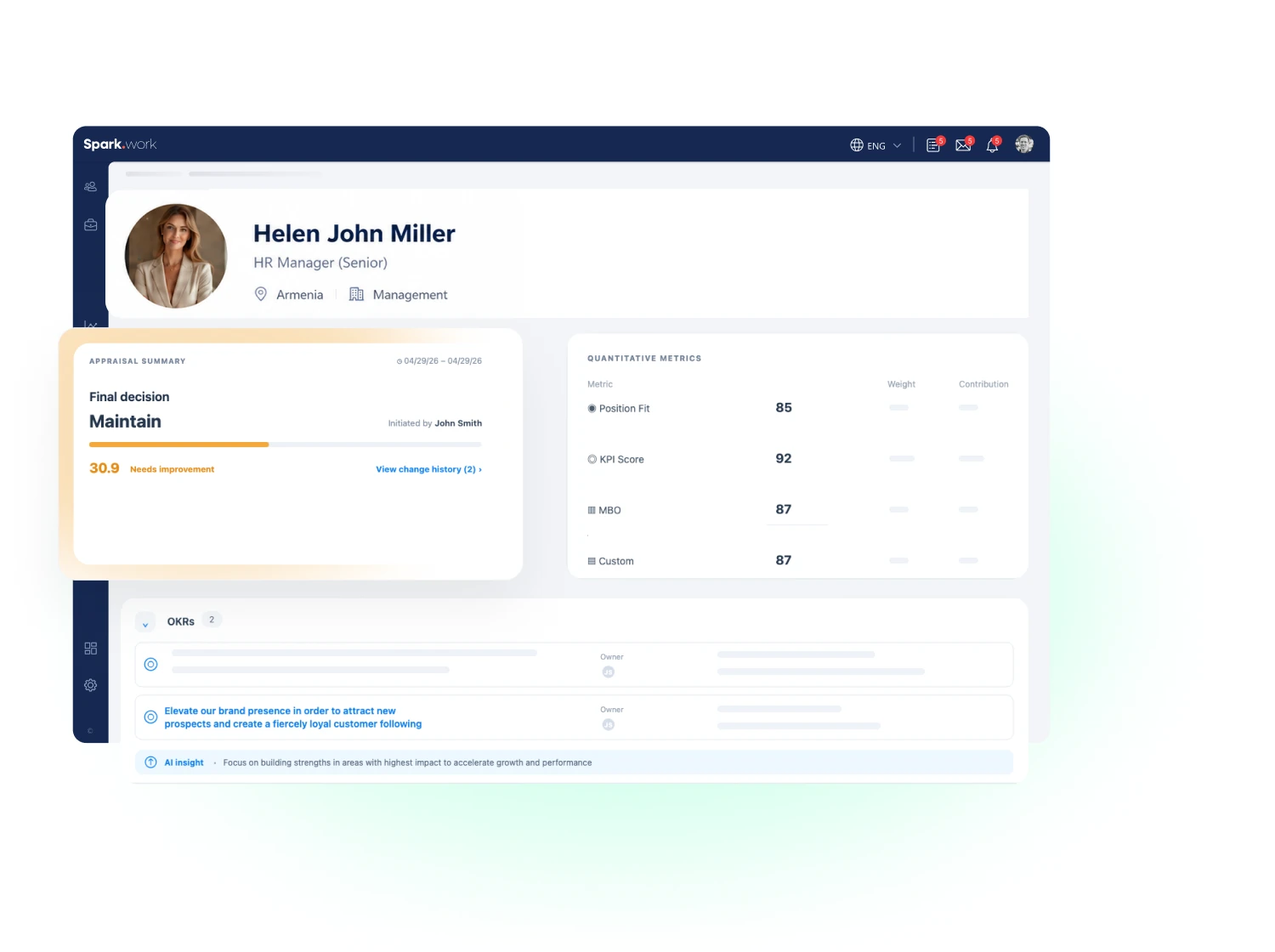
Set clear objectives, assign ownership, and define success. Spark.work keeps every goal connected to your organization’s priorities.
Define what needs to be achieved, by whom, and when, so every objective has a clear direction from the start.
Specify completion criteria so employees and managers share a clear understanding of the expected outcome.
Align MBO objectives with strategic pillars, organizational responsibilities, and related work.
OBJECTIVE SETUP
Build each objective around the information people need to understand their responsibilities and deliver results.

STRATEGIC ALIGNMENT
Goal alignment connects management expectations with the priorities they support. In Spark.work, objectives can be linked to the company's strategic structure and the work involved in delivering them.

OBJECTIVE BACKLOG
Manage newly created objectives in a central backlog before they move into active execution.
The backlog gives leadership and authorized users a structured starting point for managing objective creation.

CONNECTED WORKFLOWS
Defining objectives is the first step. Spark.work keeps them connected to the workflows responsible for approval, execution, and evaluation.
Route objectives through your organization's configured approval process before they become active.

Break higher-level objectives into supporting responsibilities across departments, teams, and individuals.

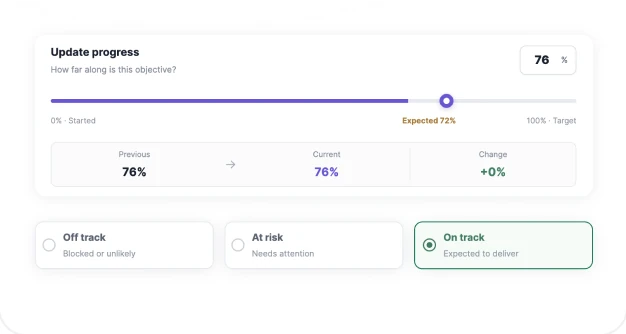
Keep approved objectives visible, report progress, and monitor achievement throughout their lifecycle.
FAQ
MBO goal setting is the process of defining objectives that employees, teams, or departments are expected to achieve within a specific timeframe. Objectives typically include clear ownership, expected outcomes, and criteria for determining whether they have been achieved.
MBO goal setting helps translate management priorities into defined responsibilities.
Create an objective, define its priority and timeframe, assign owners and contributors, and specify success criteria. You can also establish its organizational and strategic alignment and link relevant KPIs or tasks.
Once configured, the objective can be submitted through the organization's approval process.
Spark.work allows you to describe the criteria that must be met for an objective to be considered complete.
Unlike OKRs, which use measurable key results to define objective achievement, MBO objectives in Spark.work use text-based success criteria. Progress can still be reported throughout the objective's lifecycle.
Yes. Objectives can be connected to strategic pillars and perspectives, organizational bodies, related KPIs, and tasks. When aligned with strategic pillars and perspectives, they can also appear in Spark.work's Strategy Map.
Spark.work supports assigning owners and contributors to objectives, allowing organizations to define accountability and participation in achieving a goal.
New objectives appear in the MBO backlog, where authorized users can review their details and approval status. Once approved, objectives become available for active management, progress tracking, and, where appropriate, cascading to supporting objectives.
Give employees and managers clear expectations from the start. Define meaningful objectives, assign responsibility, and connect individual contributions to your organization's strategy.