
HR
The State of Armenian HR Tech: Trends, Challenges, and Opportunities

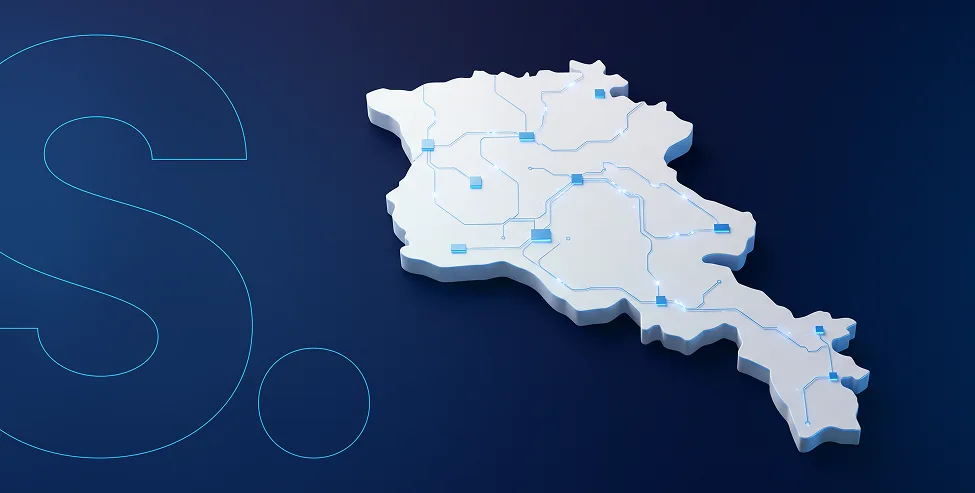
Armenia's technology sector has grown far beyond its early reputation as a small but capable engineering hub. Today, Armenian companies are building products for international markets, attracting foreign investment, and competing for talent on a global stage. As organizations become more sophisticated, the way they manage people is evolving as well.
For years, HR technology in Armenia was primarily associated with administrative efficiency. Companies looked for ways to manage employee records, streamline attendance tracking, organize recruitment processes, and digitize paperwork. These capabilities remain important, but they are no longer enough for organizations operating in increasingly complex environments.
A different challenge is emerging. As companies grow, leaders need greater visibility into performance, alignment, workforce capacity, and execution. In other words, the conversation is shifting from managing HR processes to managing organizational effectiveness.
This shift reflects broader changes taking place across the country. According to the OECD report Advancing the Digital Transformation of Armenian Businesses, Armenia's ICT sector grew by 20% and generated 4.5% of the country's GDP in 2022. The same report also notes that Armenia has placed significant emphasis on digital transformation, including the adoption of the Digitalisation Strategy of Armenia for 2021-2025.
Why the Armenian Market Is Ready for More Advanced HR Technology
Many Armenian companies are operating in a very different environment than they were a decade ago.
Technology firms now employ larger teams. Financial institutions are investing heavily in digital transformation. Service companies are expanding internationally. Public sector organizations are modernizing processes and introducing new digital systems. Across industries, leaders are being asked to manage more complex operations and higher expectations from both customers and employees.
When organizations are small, many management challenges solve themselves. Communication happens naturally. Founders maintain close relationships with employees. Priorities are discussed directly, and decision-making is highly visible.
Growth changes that dynamic.
As organizations scale, communication becomes more difficult. New management layers emerge. Teams become more specialized. Leaders become further removed from day-to-day operations. The systems and habits that worked at twenty employees often become strained at two hundred.
At that stage, organizational success depends less on individual effort and more on coordination. Leaders need clarity around who is doing what, how work connects to business priorities, and whether the organization is moving in the intended direction.
This is where HR technology begins to move beyond administration.
HR Is Becoming a Strategic Function
Globally, the role of HR has been expanding for years. The conversation is no longer limited to hiring, onboarding, payroll, and compliance.
The World Economic Forum's Future of Jobs Report 2025 identifies technological change, economic uncertainty, demographic shifts, and the green transition as major forces reshaping the global labor market through 2030. Deloitte's 2025 Global Human Capital Trends similarly frames the future of HR around work, workforce, organization, culture, and human performance rather than administration alone.
These trends are highly relevant to Armenia.
The country's talent pool remains one of its greatest strengths, but it is also one of its most competitive resources. The World Bank report Skills for Change: Preparing the Armenian and Georgian Workforce for the Future notes that around 36% of Armenian firms report a lack of workers with adequate skills as a major constraint. It also highlights sizable digital skill gaps in Armenia, particularly among workers in jobs exposed to computerization.
This matters for HR because skills, performance, capacity, and workforce planning are no longer secondary issues. They directly affect whether companies can grow, adapt, and execute.
This does not mean HR owns strategy. It means people-related decisions increasingly influence whether strategy succeeds.
A company may have ambitious growth targets, a strong product, and a clear market opportunity. However, if managers lack visibility, employees lack clarity, or performance expectations remain disconnected from business objectives, execution becomes significantly more difficult.
As organizations mature, leaders begin to realize that workforce management and business performance cannot be treated as separate conversations.
The Gap Between Digitization and Transformation
One of the most common misconceptions about digital transformation is that introducing software automatically improves management.
It doesn't.
Many organizations successfully digitize individual processes without addressing the broader challenges behind them.
Moving leave requests online improves efficiency. Digitizing recruitment creates structure around hiring. Introducing performance reviews adds consistency. Yet none of these changes automatically improve alignment, accountability, or execution.
The World Bank's report on Armenia's Digital Technology Adoption by Firms makes a similar point from a broader business perspective. It finds that over 60% of Armenian firms have not adopted modern technologies, with advanced digital tools still underused in critical business functions. This shows that the issue is not only whether companies use digital tools, but how deeply those tools support productivity, competitiveness, and decision-making.
The real opportunity lies in connecting systems.
Organizations need visibility into how goals relate to performance. They need to understand how organizational structures support business priorities. They need to connect workforce data with decision-making rather than treating information as isolated records stored in different systems.
This represents the next stage of HR technology in Armenia. The focus is shifting from digitizing processes to creating organizational visibility.
Where Spark.work Fits Into the Armenian HR Tech Landscape
This is the environment in which a new generation of Armenian HR technology platforms is emerging.
Spark.work was developed in Armenia in response to many of the challenges local organizations were encountering as they grew. Rather than focusing exclusively on traditional HR administration, the platform combines workforce management, organizational structure, recruitment, performance management, KPIs, OKRs, communication, and strategy execution within a single environment.
This reflects a broader shift in market demand.
Organizations increasingly need more than employee databases and approval workflows. They need systems that help leaders understand how people, goals, performance, and execution connect across the business.
For HR teams, this means greater visibility into workforce operations. For managers, it means clearer accountability and performance tracking. For executives, it means a stronger connection between organizational priorities and everyday work.
The significance of platforms like Spark.work is not simply that they digitize HR. Their value lies in helping organizations bridge the gap between people management and business execution.
AI Will Raise Expectations Even Further
The rapid adoption of AI is likely to accelerate this evolution.
McKinsey's article The Critical Role of Strategic Workforce Planning in the Age of AI argues that AI is increasing uncertainty around skills and capabilities, making strategic workforce planning more important. Gartner's analysis AI in HR: Separate Hype from Reality to Achieve Business Goals also notes that HR leaders need AI strategies aligned with broader enterprise AI strategies rather than disconnected experimentation.
For Armenian businesses, AI presents both an opportunity and a challenge.
On one hand, organizations have the opportunity to adopt modern technologies without being constrained by decades of legacy systems. On the other hand, AI is only as useful as the processes and data that support it.
If goals are unclear, workforce information is fragmented, and performance expectations are inconsistent, AI cannot solve those problems.
Organizations that establish strong foundations around people, structure, and execution will be in a far better position to benefit from emerging technologies.
What Comes Next for Armenian HR Tech
The Armenian HR technology market is still relatively young, which creates a unique opportunity for local innovation.
As businesses continue to grow and mature, demand is likely to increase for systems that provide more than operational efficiency. Leaders are looking for visibility, alignment, workforce insights, and stronger connections between strategy and execution.
This shift places HR technology at the center of several important trends shaping the future of Armenian business: digital transformation, workforce development, AI adoption, organizational maturity, and strategic execution.
The companies that succeed in this environment will not simply digitize existing processes. They will build systems that help organizations understand how people contribute to performance, how work supports strategy, and how decisions translate into measurable outcomes.
That is where Armenian HR tech is headed. And it is where some of the country's most ambitious organizations are already moving.
More Articles to Explore
How to Track KPIs Without Getting Lost in the Numbers
Learn how to track KPIs effectively, set meaningful targets, monitor performance, avoid common mistakes, and turn KPI data into better decisions.

HR Software With OKRs: What to Look For Beyond Goal Tracking
Not all goal management features connect everyday work to company strategy. Learn how to compare HR software with OKRs across three levels of capability.

From HRMS to Strategy Execution Software
The line between HRMS and strategy execution software is disappearing as organizations demand real alignment between people, performance, and business outcomes.